
Experiences
This section involves work and research experiences I participated through affiliation.
For research projects, you can click on images for more information.
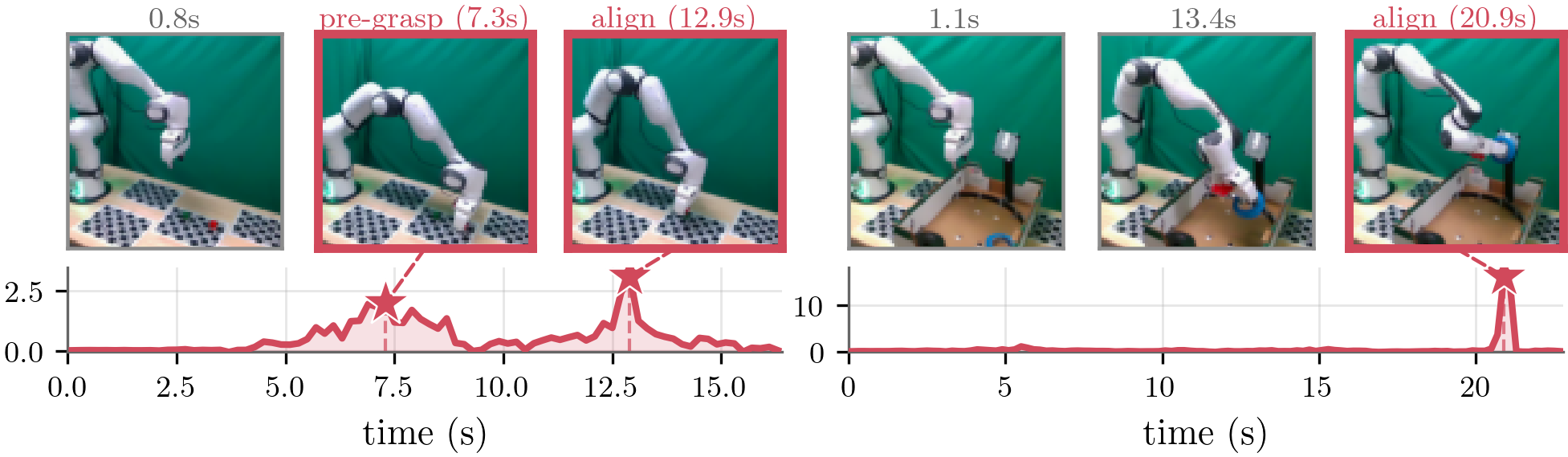
-Stanford University Safe and Intelligent Autonomy Lab, Prof. Somil Bansal (09/2025 ~ 06/2026)
Behavior cloning treats every demonstrated state as equally important, yet in a few critical states even a slight action error can derail the task. This work proposed SCRIM, which scores how vulnerable the task outcome is to small action errors at each state, and used those scores to reweight training and to select compact, high-value subsets of demonstrations.
With this work, I was a joint first author of the paper “Where Small Mistakes Matter: Quantifying State Criticality for Imitation Learning”, accepted to the 2026 Conference on Robot Learning (CoRL 2026).

-PlusAI, Inc. (06/2025 ~ 09/2025)
During my internship, I focused on improving the self-driving engagement flow with a redundant system for fallback and enhancing the vehicle’s response to emergency vehicle detection. I designed and implemented a robust full-stack fallback mechanism, complete with user-facing UI elements and backend data-extraction tools to ensure system reliability and facilitate debugging. In parallel, I collected siren data across diverse environmental conditions and developed an integrated real-time pipeline that processed detection signals and delivered them seamlessly to the autonomy stack.
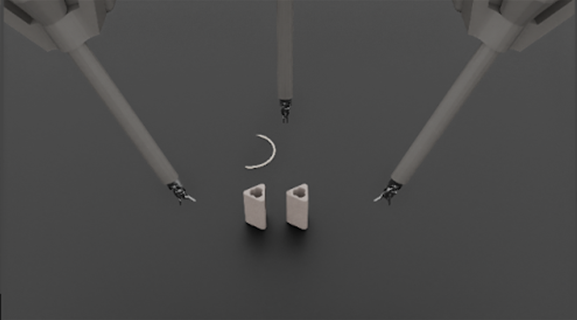
-Stanford University Collaborative Haptics and Robotics in Medicine Lab (01/2025 ~ 04/2025)
This project focused on enabling autonomous assistance in robot-assisted surgery using additional robotic arms beyond those manually operated by the surgeon. To support data collection and scalable testing, I built a simulation environment in Isaac Sim using ORBIT-Surgical assets. The setup includes the teleoperation of a simulated da Vinci robot arms via both an existing interface and the Phantom Omni device, allowing flexible experimentation for learning-based control systems.

-RideFlux, Inc. (07/2023 ~ 07/2024)
I developed, verified, and maintained Planning/Prediction features for autonomous vehicles using C++ and ROS. Specifically, my role was to improve the decision-making and prediction performance by using additional information, such as road structures and previous decisions. One of my significant projects involved integrating a function to handle potential road users in obstructed areas without making the vehicle overly conservative.
During this period, the company achieved the first unmanned vehicle license in South Korea, and I contributed by developing features for safe lane changes, Operational Design Domain(ODD) checking, etc.
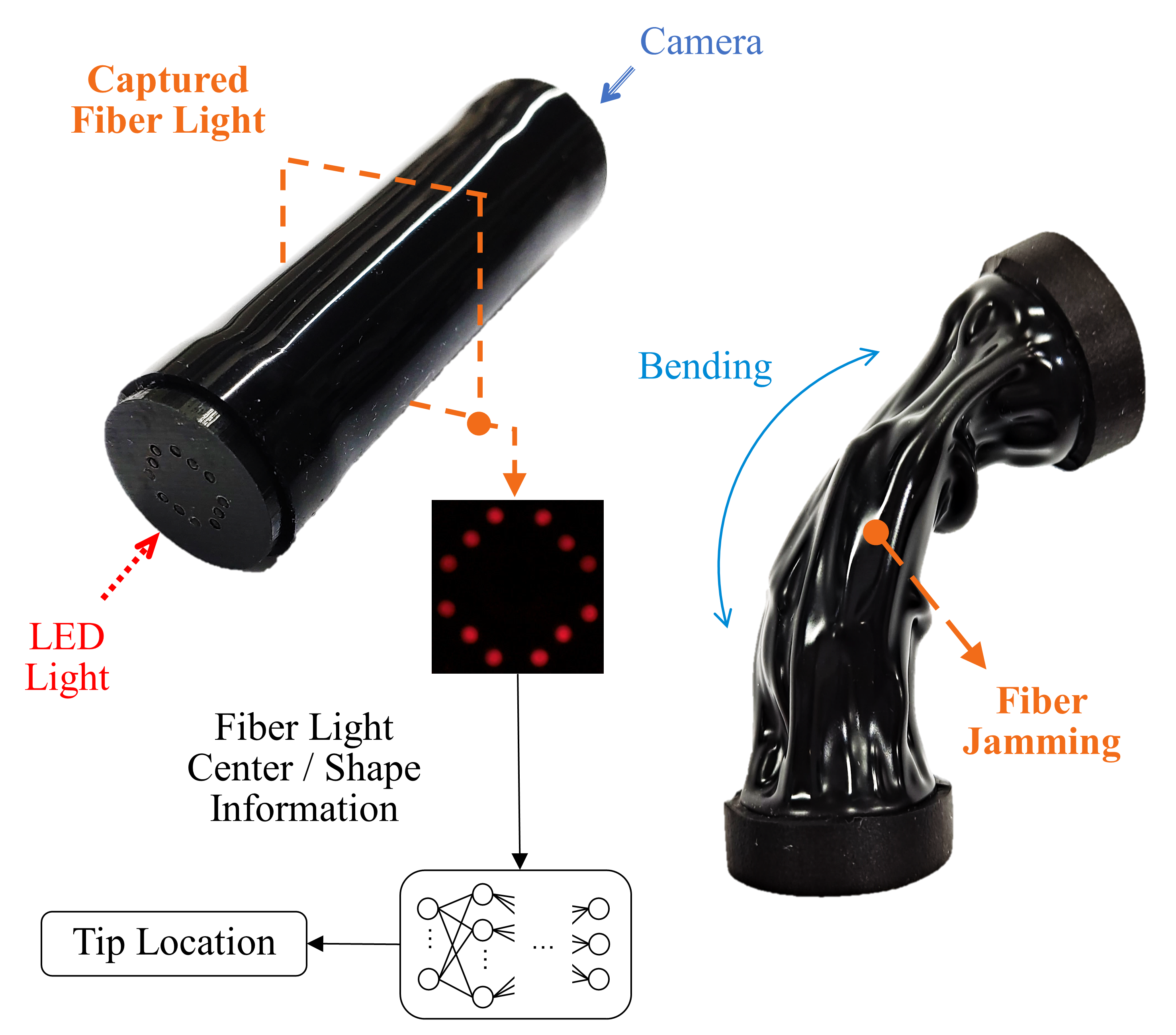
-Seoul National University Soft Robotics & Bionics Laboratory, Prof. Yong-Lae Park (07/2021 ~ 02/2023)
This work involved designing and fabricating a multi-functional soft-bending actuator and a control system for the actuator from scratch. Using optic fiber as a main material, this actuator is able to have variable stiffness through fiber jamming and proprioceptive sensing through fiber optics.
With this work, I was a joint first author of the article “Soft Bending Actuator with Fiber-Jamming Variable Stiffness and Fiber-Optic Proprioception” for IEEE Robotics and Automation Letters. Also, I presented this work at the 2024 IEEE International Conference on Robotics and Automation.
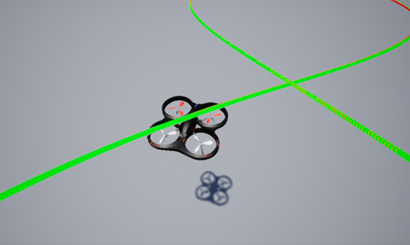
-Seoul National University Photonics Systems Laboratory, Prof. Namkyoo Park (07/2022 ~ 06/2023)
I adapted and tested a drone control algorithm, ‘Neural-Fly’, which enables robust flying under wind effect, in an Airsim simulator using Python. I started by constructing a simulator environment and collecting data to train and evaluate the neural network used in the algorithm. Utilizing inputs and outputs from the simulator, I coded the control algorithm introduced in the original paper. I could demonstrate that the performance of the rebuilt algorithm is close to that of the original paper.
-Seoul National University Biorobotics Laboratory, Prof. Kyu-Jin Cho (01/2021 ~ 06/2021)
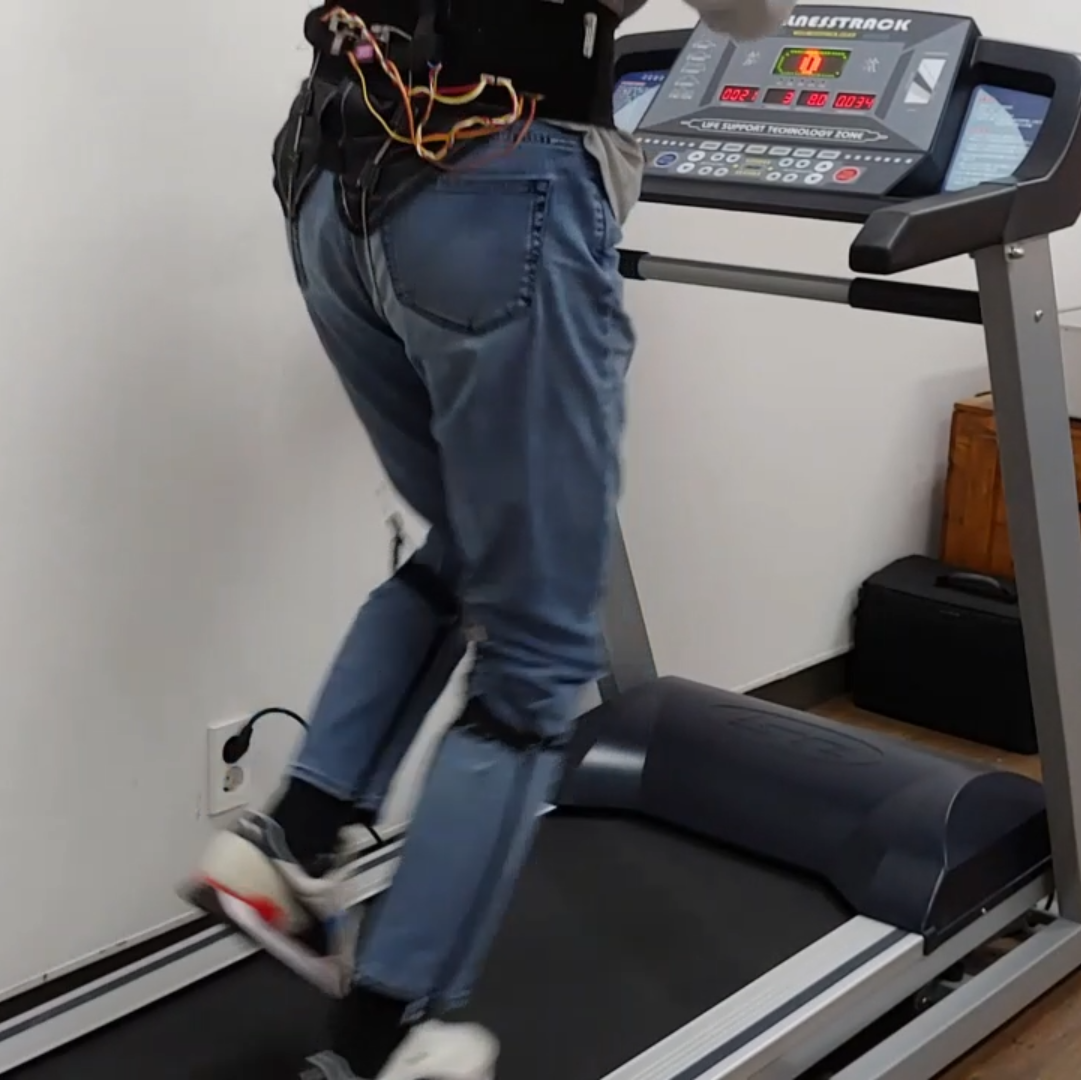
As an Undergraduate Research Opportunity Program (UROP) participant, I worked on improving a prototype of an active hamstring assisting wearable, starting with fabricating the whole structure again with several design improvements for user comfort.
Through separate experiments, I figured that the mechanical delay is the main reason for the lack of assistance during gait with fast speed. To address this issue, I developed a PID control algorithm for a faster motor and explored the idea of predicting gait states using encoder output, allowing for earlier activation of assistance.